
Wednesday, February 29, 2012
Breaking News: James Murdoch Steps Down

by Nomad
News International publishes The Times, The Sun and The Sunday Times. News International has been the center of an ongoing scandal involving illegal phone-hacking and as a result, several top editors were arrested. Additionally the News of the World, once considered Murdoch's flagship, abruptly closed last year.
James Murdoch, the son of media mogul Rupert Murdoch, will now be taking on a new role. Rupert Murdoch issued this statement:
Tuesday, February 28, 2012
Faith in Politics Exposed: Controversial but Necessary Questions for the Presidential Candidates
 by Nomad

Here's an excerpt from an NPR article, entitled "Has Obama Waged War on Religion?"
Newt Gingrich warns the U.S. is becoming a secular country, which would be a "nightmare." Rick Santorum says there's a clash between "man's laws and God's laws."Religious conservatives see an escalating war with the Obama White House. One Catholic bishop called it "the most secularist administration in history." Another bishop says it is an "a-theocracy." Bishop William Lori of Bridgeport, Conn., who heads the U.S. Conference of Catholic Bishops' new Ad Hoc Committee on Religious Liberty, believes the First Amendment is clear: The government cannot make people choose between obeying the law and following their faith.
Whether Newt Gingrich knows it or not, America is NOT becoming a secular state. It is a secular state and has been since its inception. It is in very real danger of becoming a theocratic state and that, many people would say, is the potential “nightmare.”
Two Roads Diverged: Jimmy Carter’s Speech - July 15, 1979
By Nomad

Few people recall that night in July 1979. With uncompromising directness, President Jimmy Carter laid out the truth for the American people. It was time to choose between the two ideas of progress.
Crisis Abroad and Panic at Home
The year was 1979. By this time, it was clear that the protests in Iran which had begun a year earlier were not going away. Indeed, the revolution of the long-time US ally, Iran, was becoming an international crisis. Protests throughout Iran had led to the dethroning of the Shah of Iran and in his place, Ayatollah Khomeini- a fundamentalist cleric- became the leader of the nation.
The revolution had thrown oil production into decline and, this, in turn, had driven up prices.
To make up for this loss, Saudi Arabia, and other OPEC nations boosted their respective production; however, the cartel had also announced that a series of oil price increases would accompany this increase. Gasoline prices skyrocketed and the perception of a shortage had led to widespread panic.
The revolution had thrown oil production into decline and, this, in turn, had driven up prices.
To make up for this loss, Saudi Arabia, and other OPEC nations boosted their respective production; however, the cartel had also announced that a series of oil price increases would accompany this increase. Gasoline prices skyrocketed and the perception of a shortage had led to widespread panic.
Beginning in California and spreading eastward, the panic soon turned to anger from the American public and this hostility was primarily directed at the Carter administration. One of the reasons for this was Carter’s decision to cut all imports of Iranian goods, following the seizure of American hostages when students raided the American embassy in Tehran.
A President in Search of Redemption
Carter's approval rating had dropped to 25%, even lower than Richard Nixon's during the Watergate scandal. Following an exhausting summit in Tokyo, the one thing President Carter desired most was a break. He had planned to travel to Hawaii for a vacation.
However, his chief of staff took a look at the poll numbers and warned him that his chances of re-election would be in serious doubt unless he took some action immediately.
Monday, February 27, 2012
American Dreams: My Father, Karl Marx and the Man who Sold the Rope 2/2
In part one of this two-part series, I wrote of how the American dream had changed since my father's time. The promise of ever-increasing prosperity seems to belong to a shrinking minority. History had played an ironic joke on the West. While the Soviet Union was collapsing due to the pressure of union labor, the United States under Reagan was signaling to corporate America that unionized labor was to be discarded on the ''scrap heap of history.''
 And Then The Slow Decline
 And Then The Slow Decline
Now let's take a look at the consequences of this policy and who actually benefited.
At one time, when the main challenge to capitalism was Communism, leaders of the free world touted rising consumption afforded by rising wages as a measure of its success.
Starting around the 1980s, however, real wages and productivity, which once went hand in hand, decoupled. No longer did harder work mean higher wages. Productivity continued to rise- adding to the wealth of corporations- while wages remained steady. This trend has continued to the present day.
At that point, personal savings began dropping hitting an all-time low of just .09% in 2000 and it stayed low until the last few years. After hitting depression-era lows, it has been slowly rising again since 2008.
Additionally, access to easy credit has allowed the American citizen to shop and shop, giving, at least, the illusion of prosperity. But buying a lifestyle built on credit is a gamble because credit assumes that tomorrow will be as good or better than today. Life could be pretty good with a high credit limit. Especially with the flood of cheaply-priced merchandise on offer, all of it made possible by non-unionized workers in Asia and elsewhere.
Consider these facts.
Before credit became so widely available, personal savings rates were rising steadily each year. In 1960, Americans were saving 5.4% of their total income, It reached a high of 14.6% in 1975, and by 1982, it leveled off at 10.9%. But all that changed in the mid-1980s under Reagan when consumer credit became more commonplace.
At that point, personal savings began dropping hitting an all-time low of just .09% in 2000 and it stayed low until the last few years. After hitting depression-era lows, it has been slowly rising again since 2008.
Sunday, February 26, 2012
American Dreams: My Father, Karl Marx and the Man who Sold the Rope 1/2
by Nomad

My father, born in 1929, grew up in the midst of the Great Depression, in what most people would consider extreme poverty. His father died one week after his birth leaving his widowed mother to raise her five children alone. Had it not been for a productive farmland, it is doubtful they would have survived. “We didn’t have two nickles to rub together,” he’d often tell me,”but we never even realized we were poor. Everybody we knew was in the same situation as we were.”
In 1951. he left the farm to join in the Korean War to fight the spread of the Communist threat. The Red Menace- China- was on the verge of expanding across the border into Korea. Following that, he received credit from a GI loan which allowed him to buy a very humble mobile home to start his married life.
In the economic boom of the 1950s, my father found employment as a precision sheet metal worker at a aircraft manufacturing plant. Along with thousands of other unskilled workers returning from Korea, the company trained my father with the idea of steady long term employment. In turn, my father worked at the company for thirty years. He did not particularly desire to rise up in the hierarchy of the company. He told me that he’d prefer not to have the stress that went with the responsibility. He preferred to spend more time at home at the end of his shift. There was also the goal that he knew that his children would, by his hard, boring and unsatisfying labor, have a better life than he did. It was an attainable goal. Through the use of collective bargaining of his union or the rare labor action, my father’s wage steadily increased.
In 1951. he left the farm to join in the Korean War to fight the spread of the Communist threat. The Red Menace- China- was on the verge of expanding across the border into Korea. Following that, he received credit from a GI loan which allowed him to buy a very humble mobile home to start his married life.
In the economic boom of the 1950s, my father found employment as a precision sheet metal worker at a aircraft manufacturing plant. Along with thousands of other unskilled workers returning from Korea, the company trained my father with the idea of steady long term employment. In turn, my father worked at the company for thirty years. He did not particularly desire to rise up in the hierarchy of the company. He told me that he’d prefer not to have the stress that went with the responsibility. He preferred to spend more time at home at the end of his shift. There was also the goal that he knew that his children would, by his hard, boring and unsatisfying labor, have a better life than he did. It was an attainable goal. Through the use of collective bargaining of his union or the rare labor action, my father’s wage steadily increased.
Saturday, February 25, 2012
Evangelical Candidates: Personal Faith vs. Public Policy
by Nomad
A Sin Against God 
What has changed is to what degree this once personal issue has become a candidate's "selling point" to the politically powerful Christian Right Wing of the Republican party.
When this problem was brought up in the 1960 Kennedy vs. Nixon election the matter was mentioned because some people were concerned that Kennedy could not represent all people and that there might well be conflicts between the Catholic doctrine and the Constitution. How this problematic issue was dealt with, the answer Kennedy gave to critics, is an example of the kind of politics and politicians that have come and gone.
The Sudden Death of the Living Wage: ACORN 3/3
by Nomad

The Rebirth of the Movement
One organization took up the cause of campaigning for a living wage and throughout the 1990s, won unprecedented successes. It was called “the nation's largest community organization of low- and moderate-income families, working together for social justice and stronger communities" with the name the Association of Community Organizations for Reform Now, better known as ACORN.
Ilyse Hogue, writing for The Nation, gives this summary about the important role that ACORN played.
Ilyse Hogue, writing for The Nation, gives this summary about the important role that ACORN played.
ACORN was unique as an organization that served our nation’s poor people. Wrangling with life’s common challenges like mortgages and housing forms, ACORN employees built trust by offering help person to person, neighborhood by neighborhood. They then leveraged that trust to lobby for federal legislation to address the root causes of the crises facing these people—predatory lending, lack of community investment and stagnant wages.
The Sudden Death of the Living Wage: Republican Class Warfare 2/3
by Nomad
 In Part One of this series we introduced you to the concept of the Living Wage, which is entirely different from the Minimum Wage. Next we will look at conservative's arguments against the idea and the true and somewhat surprising history of the living wage.
The Republican party has had a long-held opposition toward any talk of a living wage. This latest crop has their own ideas about how to deal with the poor. Rick Santorum, for example, seems to think that marriage is the solution to poverty.
What two things, that if you do, will guarantee that you will not be in poverty in America?” he asked the crowd. “Number one, graduate from high school. Number two, get married. Before you have children,” he said. “If you do those two things, you will be successful economically.
Michele Bachmann, who recently claimed she had been the “perfect’ candidate for president, had announced her intention to do away with any sort of minimum wage limit in order to stimulate the economy. Newt Gingrich called child labor laws “stupid” and Herman Cain told unemployed OWS protesters that
“ If you don't have a job and you're not rich, blame yourself ... It is not a person's fault if they succeeded, it is a person's fault if they failed."
This attitude is fairly common with Fox-News-watching public. Reagan played that mish-mash of religion, patriotism and the much-touted work ethic very convincingly. The logical runs like this:
America is the land of opportunity.
We, as a nation, are blessed by God.
Wealth and success is a sign of God's blessing.
Every man's success and failure depends on the his individual attributes.
Therefore, government has no responsibility in the matter.
It is linked with the delusion that that the United States of America is a meritocracy where everyone is treated fairly and anyone can pull himself up by his bootstraps if he or she just works hard enough, pays their dues and keeps their nose to the grindstone.
The Sudden Death of the Living Wage : Mitt Romney Flip-Flop 1/3
by Nomad

Romney’s Double Back Flip
Last week Republican front-runner, Mitt Romney somehow managed to flip-flop from the frying pan into the political fire when he told reporters that he didn't fret about the poor because of the social safety net. He explained to a CNN reporter:“I'm not concerned about the very poor. We have a safety net there. If it needs repair, I'll fix it.”
President as handy-man? Naturally, like every politician who finds himself in a pickle, he blamed the media for taking his statement out of context. Like his “corporations are people too” remark, Romney once again seemed unable to hear how out of touch he actually sounds. Until everybody else notices.
Friday, February 24, 2012
The Amazing Story of Clarence Thomas' Confirmation Hearings 3/3
By Nomad
Part One
Part Two
In this the final part of the three part series, I will look at the stormy conclusion to the confirmation hearings. The Senate judiciary Committee, unable to reach a decision, passed the issue to the Senate for a vote. Unknown to most of the members, a storm was brewing and it would prove to be a public relations nightmare for the Bush Administration.
Part Two
In this the final part of the three part series, I will look at the stormy conclusion to the confirmation hearings. The Senate judiciary Committee, unable to reach a decision, passed the issue to the Senate for a vote. Unknown to most of the members, a storm was brewing and it would prove to be a public relations nightmare for the Bush Administration.

Seeing the handwriting on the wall, Danforth, as Thomas’ protector pulled out all stops in order to force a vote before the Senate was able to hear Professor Hill’s testimony.
Additionally the Senator threatened to refuse to support a civil rights bill presently under discussion if moderate Democrats opposed Thomas. According to sourcewatch
In his book, Danforth would later admitted displaying very un-diplomatic behavior when Thomas' nomination was challenged: "I completely lost my temper in a table-pounding, shouting, red-in-the-face profane rage." Danforth wrote that he saw his role defending Thomas as "a warrior doing battle for the Lord."
The entire question of Thomas’ qualifications suddenly took a back seat to the more sensational allegations of sexual misconduct in the office. The White House had worked hard to build up the image of Clarence Thomas as a man who had risen from abject poverty to an esteemed position of trust. It was a focus away from qualifications and competence to character and judgement. And suddenly, with the testimony of Anita Hill, they watched as all their hard work slip away as the young black woman began her testimony..
My name is Anita F. Hill, and I am a professor of law at the University of Oklahoma. I was born on a farm in Okmulgee County, OK, in 1956. I am the youngest of 13 children. I had my early education in Okmulgee County. My father, Albert Hill, is a farmer in that area. My mother's name is Erma Hill. She is also a farmer and a housewife. My childhood was one of a lot of hard work and not much money, but it was one of solid family affection as represented by my parents. I was reared in a religious atmosphere in the Baptist faith, and I have been a member of the Antioch Baptist Church, in Tulsa, OK, since 1983. It is a very warm part of my life at the present time.

She then describe the duties and responsibilities while she worked with Thomas. It was, however, the troubling allegations about his behavior that caused a stir.
After approximately 3 months of working there, he asked me to go out socially with him. What happened next and telling the world about it are the two most difficult things, experiences of my life. It is only after a great deal of agonizing consideration and a number of sleepless nights that I am able to talk of these unpleasant matters to anyone but my close friends.
Her allegations were specific and detailed. From a television producer’s point of view, exactly the kind of sensationalism that could turn a rather dry debate about judicial matters into a television news event.
Thursday, February 23, 2012
The Amazing Story of Clarence Thomas' Confirmation Hearings 2/3
by Nomad
 In the first part of this three part series, we took a closer look at the rise of Clarence Thomas, starting from his graduation from Yale to a circuit court judge.
 Now I want to report the story of the reaction when the Bush Administration pushed to have Thomas, after only one year as a circuit court judge, confirmed as a Supreme Court Justice.
Even before the Senate Judiciary Committee confirmation hearings had begun, it was clear that a public relations battle was brewing about the administration’s choice. President Bush clumsily said, at the announcement of Thomas’ nomination, that he was the "best qualified [nominee] at this time." This was odd phrasing, to be sure. In typical Bush fashion, the president floundered while trying too hard to explain what he really didn’t mean:
"I've kept my word to the American people and the Senate by picking the best man for the job based on merits. And the fact that he's a minority, so much the better. But that is not the factor, and I would strong resent any charge that might be forthcoming on quotas when it relates to appointing the best man to the court.
Wednesday, February 22, 2012
The Amazing Story of Clarence Thomas' Confirmation Hearings 1/3
by Nomad

As a service, I thought I would take a careful examination of the lead-up to his confirmation, the struggle and the scandalous allegations in a three-part post. I hope you will find it an interesting and enlightening peek backward.
Prelude
In the autumn of 1971, Clarence Thomas, having graduated from College of the Holy Cross in Worcester, Massachusetts with an A.B. cum laude in English literature, enrolled in Yale Law school, in part under the university’s affirmative action plan to increase the numbers of minority students. As a black man, Thomas was troubled by this policy which he saw as nothing more than a selection by quota.According to the book, "First Principle" the jurisprudence of Clarence Thomas, Thomas would later say of the policy,
"You had to prove yourself every day because the presumption was that you were dumb and didn't deserve to be there on merit."
Tuesday, February 21, 2012
Republican Faust: The Rise and Fall of Mike Connell -3
 by Nomad


Part One and Part Two of the Series. In this last part of the series, I'd like to take a closer look at the strange circumstances of the airplane crash that took the life of Mike Connell.
Accident or Conspiracy?
The timing of Mike Connell's sudden death in a plane crash was. given the situation he was involved in, remarkably coincidental. So coincidental that it is the kind of event that naturally creates speculation about conspiracy. All the elements are certainly there.
On the other hand, planes all too often do fall out of the sky. Pilots make misjudgements about their abilities, or the weather. Planes may be poorly maintained. Planes crashes involving light aircraft are much more common than you'd think.
In the year of Connell's death, there were 156 other crashes and 884 other deaths. And the most likely scenario- as opposed to sabotage- would be problems with ice on the wings.
The National Transportation Safety Board (NTSB) report speculates that the most probable cause of the crash was a combination of pilot error and weather conditions.
In this case, Connell was faulted for deciding to conduct the flight into "known icing conditions."
Monday, February 20, 2012
Republican Faust: The Rise and Fall of Mike Connell -2
by Nomad

In Part One of this three part series, we discussed the rise of one of the GOP's insider, who quite possibly helped to engineer the 2004 presidential election fraud.
Taking the Fall
After agreeing initially to give critical information in a vote-rigging case in Ohio, Mike Connell, for whatever reasons, apparently had a change of heart. Given the potentially disastrous consequences of defying his former bosses, it is perhaps understandable.
Back in Ohio courts, King Lincoln Bronzeville v. Blackwell was an ongoing case filed on August 31, 2006 and dragged on and on. The former Ohio Secretary of State Blackwell the defendant, was accused of
"having conspired to deprive and continue to deprive Ohioans of their right to vote and have, in fact, deprived and continue to deprive Ohioans of their right to vote by, in a selective and discriminatory manner, unfairly allocate election resources (such as voting machines), institute a system of provisional ballots, purge voter registrations, and broke the bi-partisan chain of custody ballots."
Sunday, February 19, 2012
Republican Faust: The Rise and Fall of Mike Connell - 1/3
by Nomad
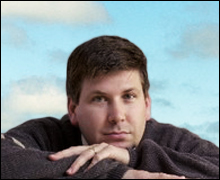
 The story of the rise and fall of Republican insider, Mike Connell isn't a familiar one. This investigation looks at the life and death of one of the people who was implicated in the rigging of the Ohio results in the 2004 presidential election.
At about 6 p.m. on Friday, 19 December 2008, a single-engine 1997 Piper Saratoga aircraft, with only the pilot aboard, crashed into a residential area in Uniontown, Ohio as it was preparing to land at Akron-Canton airport.
Arriving at the scene, fire crews found only burning wreckage of the plane scattered between homes on Charolais Street. The pilot had been thrown upon impact and had died instantly of massive blunt force trauma, his belongings scattered in the yards.
First responders arrived on the scene immediately after the crash. Even then, irregularities began. Simon Worrall in an article The Mysterious Death of Bush's Cyber-Guru, writes of those first minutes:
First responders arrived on the scene immediately after the crash. Even then, irregularities began. Simon Worrall in an article The Mysterious Death of Bush's Cyber-Guru, writes of those first minutes:
Capt. Lorin Geisner of the Greentown Fire Department was the first person to arrive at the scene. “We received a 911 call, so we contacted the tower and asked what size plane it was and how many souls were on board,” he recalls. “But we were informed that the tower was in lockdown and that no information was available.”
This was to be the first of many abnormalities in a case that would send shock waves through the blogosphere with speculations of sabotage and foul play. In the bewildering reality-bending world of conspiracy theories, the events that surround the Connell crash belong in a class all their own.
Saturday, February 18, 2012
Sarah Palin: Fooling Some of the People
by Nomad

Perhaps nobody, since that time, has put those remarkably un-funnny sentiments into practice better than Sarah Palin.
Palin is an instructive example of how a demagogue can collect enough of a following to become something of a phenomena in American politics. The techniques she has used have been effective for a small percentage of the population but seem now to have reached a kind of limit of diminishing returns. The Palin package, which has been sculpted and revised since the moment she was chosen as McCain's running mate, is a triumph of modern-day political marketing.
Sadly, outside of the bloggers and their followers, practically the only challenge or threat the marketers, press agents and handlers ever faced was Sarah Palin herself. This is a person who obviously has a lot of skeletons scratching at her closet doors. Like a majority of politicians perhaps.
More importantly, Sarah Palin's larger problem is her own behavior when challenged.
Friday, February 17, 2012
The Santorums and the Bully's Defense: Rick and Karen Play the Victim Card
by Nomad
Victimhood and the Messiah-Complex
I saw this interesting video clip at The Raw Story.
Here’s the background information to the clip. At a question-and-answer event in South Carolina for mothers, “Moms Matter 2012″ Rick and Karen Santorum alleged that the gay community has been attempting to vilify her husband by portraying him as a gay-hating religious bigot.
Nothing could be further from the truth, Karen Santorum declared to the friendly audience. She took the microphone to defend her husband who meanwhile wore his best victim expression.
“As Rick’s wife, I have known him and loved him for 23 years,” she said. “I think it’s very sad what the gay activists have done out there. They vilify him. It is so wrong. He loves them. What he has simply said is marriage shouldn’t happen.”
It’s all very confused in Karen Santorum’s mind, it seems. She somehow managed to twist things around a great deal. Very conveniently.
Sunday, February 12, 2012
Things You Should Know about the Rise of the American Police State
By Nomad
From Fiction to Fact
Here is a clip from that brilliant, strange but frightening film "Brazil." The film was a surreal tragic comedy involving a Dystopian authoritarian world where the last refuge of the common man is in his heroic dreams.
Because of the threat of terrorism, the state relies on an aggressive policy of No-Questions-asked policy which soon becomes mere intimidation.
Even then, sometimes things go wrong. But this was all fiction, you say. Just a harmless bit of entertainment. I mean, it couldn't happen in the free nations of the West. We have protections for our civil rights built into the system, after all. These have to be respected by authorities.
In America and Europe, according to the conventional wisdom, there are safeguards making sure abuse of power cannot happen here. That is a proud notion based on a small degree of truth and a great deal of wishful thinking. In fact, beginning with the war on drugs and dramatically increasing with the war on terror, the local police have become more and more aggressive in their assault on the rights of citizens.
In America and Europe, according to the conventional wisdom, there are safeguards making sure abuse of power cannot happen here. That is a proud notion based on a small degree of truth and a great deal of wishful thinking. In fact, beginning with the war on drugs and dramatically increasing with the war on terror, the local police have become more and more aggressive in their assault on the rights of citizens.
Thursday, February 9, 2012
Americans for Prosperity: The Koch Industries - Tea Party Nexus
By Nomad
 Americans for Prosperity: What It is

The Tea Party members seem to take great pride in portraying themselves as modern day revolutionaries, the conscience of the people taking back their government. In their minds, the Tea Party is a spontaneously organized, leaderless and populist grassroots movement.
In fact, many- if not most of them- have never heard of the oil billionaires David and Charles Koch, or what they do or how they spend their wealth. It is a sadly ironic fact that even those saluting the Kochs’ flag may not know who these brothers are. If they have heard of the organization named Americans for Prosperity, it would have probably have been on Fox News. And, for a news organization, Fox News is exceedingly good at keeping secrets.
In fact, many- if not most of them- have never heard of the oil billionaires David and Charles Koch, or what they do or how they spend their wealth. It is a sadly ironic fact that even those saluting the Kochs’ flag may not know who these brothers are. If they have heard of the organization named Americans for Prosperity, it would have probably have been on Fox News. And, for a news organization, Fox News is exceedingly good at keeping secrets.
Monday, February 6, 2012
Michael Glassner - Palin's New Chief of Staff - The Haiti Connection
by Nomad

If CNN's latest report is true, Sarah Palin may be serious about running for president after all.
In the last few days, she has apparently decided to add a veteran Republican strategist to serve as chief-of-staff for her political action committee, Sarah PAC.
After a bit of investigation, all I can say that if it is all true then she is off to a pretty bad start.
Michael Glassner, an attorney and longtime adviser to former Kansas senator and presidential candidate Bob Dole, has signed on to steer the former Alaska governor's political operation as she considers a possible 2012 presidential bid.
One would assume that this is the very same Michael Glassner who was in charge of campaign operations during the 2008 McCain-Palin bid. Glassner, registered as a federal lobbyist, was a member of the McCain New York, New Jersey Connecticut Finance Committee and a bundler for John McCain.
Saturday, February 4, 2012
Tornadoes and Koch Industries: An Elegant Solution
by Nomad
(originally posted in April 2011 at Nomadic View blog)
On one hand, we have the Tea Party demanding less government, except in an emergency, and on the other hand, we have the Koch Brothers- who've spent a fortune trying to undermine climate change legislation. Why not unite these two and cut out the middle man? That's the taxpayers. I'm just surprised nobody thought of this solution before.
(originally posted in April 2011 at Nomadic View blog)
On April 28th, 2011, tornadoes swept through the south of the United States, killing 128 people in Alabama and 32 others in Mississippi and leaving long trails of destruction. Homes and businesses were left as piles of rubble. Towns were plowed down the middle and many residents, having lost all they owned, felt lucky just to be alive. My sympathies went out to the survivors and my condolences to the families that have lost loved ones.
This all came after a week in which storms torn through a half a dozen states in what meteorologists have called the deadliest season in nearly four decades. Republican Governor Robert Bentley of Alabama declared a state of emergency and said he was deploying 2,000 National Guardsman.
Similarly, Mississippi Governor Haley Barbour declared a state of emergency for 39 counties. “Our thoughts and prayers are with the families who lost loved ones or property in these devastating spring storms,” Gov. Barbour said. “A large section of our state has been impacted, and our emergency responders are doing an excellent job in helping communities. This State of Emergency declaration will allow the state to offer aid to begin recovery efforts.”

Nobody can blame the governor for requesting money when it is urgently needed. However, there's a ugly, hypocritical side to Barbour's requests. Like numerous Republican politicians of late, Gov. Haley Barbour last March chastised Obama for "limitless government" and out of control spending. His stand against Big Government has made him something of a "politician of note" in the Republican party.
Wednesday, February 1, 2012
Michele Bachmann's Constitutional Classes: Spring Training for the Minor Leagues?
by Nomad
Normally when a Republic as great as the United States elects a citizen to a high office, the public expects that person to be politically "fully-developed." Naturally we don't expect to have to give classes to teach them what they should already be familiar with, such as, for example, the laws of the land or the basic principles upon which that republic was founded, namely the Constitution. And we certainly don't expect the American taxpayers to foot the bill for these remedial classes.
Yet, apparently Rep. Michele Bachmann thinks that new members of Congress - read, Tea Party members - need some indoctrination into the the extreme far right's world view.
Yet, apparently Rep. Michele Bachmann thinks that new members of Congress - read, Tea Party members - need some indoctrination into the the extreme far right's world view.
Subscribe to:
Posts (Atom)