by Nomad
 In this final installment of the three-part series, we turn to the realities of Putin's attempt at empire-building and the tragedy of lost opportunities. We also ask "Quo Vadis, Mother Russia?"
Part One
Part Two
A Very Dangerous Neighbor
Although he might be nostalgic for the good old days of the Soviet era, Russian President Putin is intelligent enough to know there's little hope of returning to that time. One of the main drawbacks to that period was the failure to move hearts and minds. The dull and drab years could not possibly inspire a nation.
He seems much more interested in a revival of Russian imperialism, steeped in a largely imaginary czarist past and supported by a national religion.
This official revival of old imperial pomp and glory coincided with an increasingly aggressive behavior vis-à-vis the former Soviet republics.
In 2009, Putin's policies really moved out of the domestic arena. In August of that year, a new law came into effect which allowed the use of Russian troops in foreign countries “to protect citizens of the Russian Federation.”
The threat of the law lay in its interpretation and application.
These measures seemed to be meant as a legal preparation for eventual armed interventions in Russia’s Near Abroad and were interpreted as a growing Russian bellicosity, experienced as a threat by its neighboring states.
As we have seen, those fears about the implications of the law were entirely justified with the invasion of Ukraine.
In 2014,
Russian Foreign Minister Sergey Lavrov attempted to justify the use of Russian troops sent into neighboring Ukraine’s Crimea region as a necessary protection for his country’s citizens living there.
Lavrov told the
UN Council on Human Rights in Geneva:
“We are talking here about protection of our citizens and compatriots, about protection of the most fundamental of the human rights – the right to live, and nothing more.”
He assured the audience:
“Human rights are too important to make it a bargaining chip in geopolitical games, to use it to impose one’s will on others; less so to instill regime change,”
However, absolutely nobody was fooled by Lavrov's remark.


 In this final installment of the three-part series, we turn to the realities of Putin's attempt at empire-building and the tragedy of lost opportunities. We also ask "Quo Vadis, Mother Russia?"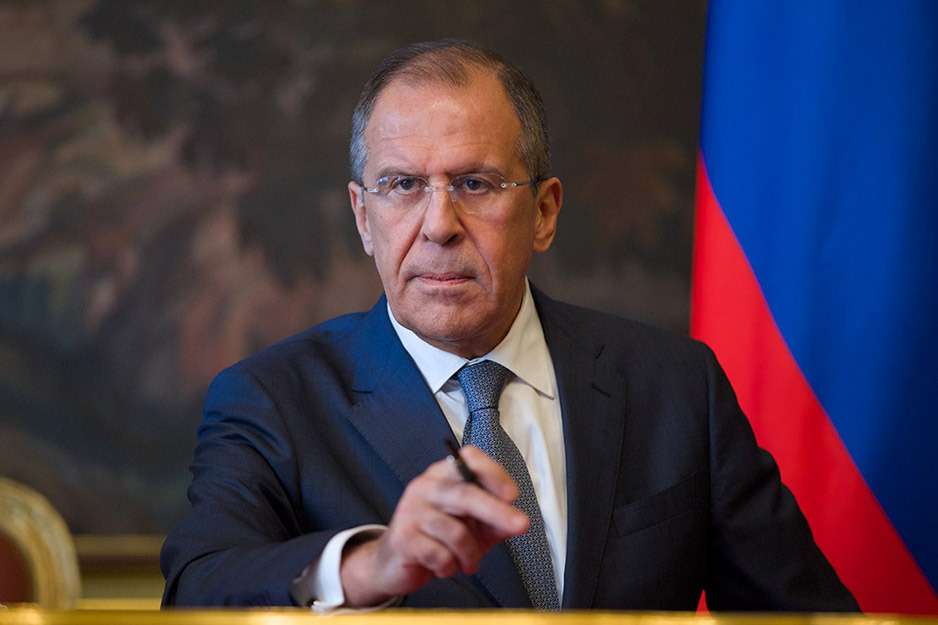
 In Part One of this three-part series, we examined how the fall of the Soviet Union should have provided Russia with its best hope for liberal democracy.