Saturday, March 31, 2012

TED Lecture: Jessica Jackley: Poverty, Money -- and Love

I'd like to believe there are more people like Ms. Jackley than people like the Koch brothers, or some of the other people that have been mentioned on this blog.
If you like more information about the Kiva program, you can find it at http://www.kiva.org/.   

Since Kiva was founded in 2005:

744,179 Kiva lenders have financed
$300 million in loans at a
98.94% Repayment rate
744,179 people have made loans
80.45% of those loans have been made to women in
146 countries around the world and
the average loan is only $392.10

Here are a some faces of the people that Kiva is helping. 

_________________________
What's your opinion of this program? If you have a moment to "like" this post and/or retweet the link below, it would be greatly appreciated. Thanks.

Thursday, March 29, 2012

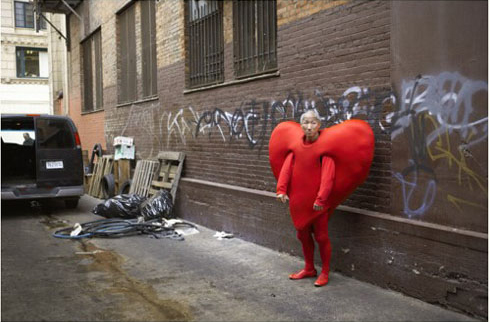
Nomadic Exclusive: An Interview with Dick Cheney’s New Heart

Nomadic Exclusive: An Interview with Dick Cheney’s New Heart
by Nomad
In an unbelievable stroke of luck, Nomadic Politics scored this exclusive interview with one of the new kids on the neo-conservative block (organ-wise, that is).

Dick Cheney’s heart agreed to our request for interview last Monday at the swanky Cœur de Pierre restaurant in Manhattan's Upper West Side.

Here is a transcript of it.

I suppose you are having to get used to being famous. What’s it like?

Ever had a four-week deluxe coach tour of Siberia? It’s a lot like that. Except on this bus, you are locked in the on board bathroom the entire time.

I see. So, now that you ’ve had some time to adjust, what do you think of your new home?

Well, to be honest, as much as I’ve always wanted to be a productive, contributing organ, I have to tell you, I am a little disappointed. 

Why?

You know, expectations.

So what were you expecting?

It was all so confusing, you know. A last minute deal. One minute I was beating away in the chest of a very sweet young girl in Iowa, who had just fallen in love with a guy that had just fallen in love with her. 
By the way, you people out there, please stop texting and driving.And then? And then, the next minute, bam boom, I am thrown in a container of dry ice and shipped cross-country. Traveled first class too. But then, I learned the whole story.

Yes?

Well, it’s Dick Cheney.

Do go on.

I don’t mean to be rude or anything but, it’s Dick Cheney. I had no idea. Nobody asked me what I wanted. I would have even settled for George Bush if it came right down to it. 
At least he has a sense of humor.
(sighs)
Anyway, I am trying my best to be compatible.

I take you don’t care for the former vice president of the United States much.

One of the most loathed men in America? You jest. 

Remember when America invaded Iraq because Cheney swore up and down there was no question of chemical and biological weapons there. And once we got in there, he arranged no-bid contracts for all his crony friends. And they in turn overcharged the government. By a billion dollars? 

That’s the same guy I am hooked up with. I am not one to judge but.. would you be proud?
I see. So what is it like being Cheney’s new heart? 

Straight from the … me? It’s no big thrill, let me tell you. First of all, the last occupant of this position must have been very small and insensitive. I feel cramped and cold all the time. It’s really a very sinister place. I feel dirty here. Sometimes in the night, I cry out and all I hear is an echo. And it smells like rancid lard. 

A lot of people have been discussing the fact that Mr. Cheney is 71 years old. There’s been talk of some kind of age limits for transplants. What’s your take on that?

If Dick was at the top of the receiving list, I can’t help wondering who was next in line. It breaks.. me.. to think that I had a chance to save the life of a child. A kid who could have grown up and saved the world from people like, well, you know who I mean.
Let me lay this statistic on you: More than 3,100 Americans are waiting now- this very minute- for somebody like me, and sad to say this, but about 330 die each year before a suitable match becomes available.

(ed. From Reuters: Cheney had been on a waiting list for a heart transplant for 20 months, which was a bit longer than the average wait time of six months to a year, according to a study published last year in the journal Circulation)

So what are your future plans?


I know for a fact, I have at least a billion more beats left in me but I’ll be checking out of here in a couple of years. I have to be realistic. He has maybe ten more years left. Is that fair to me, I ask you? 

Frankly, it's too soon to talk about the future. I am still traumatized. A transplant's no walk in the park, I assure you. Strangers' fingers all over you, people poking you. Degrading. I didn't even know those people. It's like a TSA body search, but with blood.I’d have been a lot happier to have settled into a home where I am appreciated. Like in a ethical compassionate atheist type who eats a lot of vegetables and exercises regularly. Somebody who likes nature and respects humanity. Is that so much to ask for?


One last question, if you had a chance to speak directly to Mr. Cheney, what would you tell him?

Hmm.. I doubt very much he has ever listened to his heart. I suppose I would tell him what a lovely world it was before he stuck his nose in it.

___________________ 
If you have enjoyed this parody, please be sure to share it on twitter and other social media. And naturally, your comments are welcome too. Thanks.

Supreme Court Reviews Obama's Health Care Reform: A Question of the Character of A Nation

by Nomad
Supreme Court Nomadic Politics
As the Supreme Court begins a long review of the health reform plan with a final decision sometime around June, many on the Right are already predicting trouble for Obama. In particular, the justices are giving special attention to the constitutionality question of the individual mandate, a key feature of the program. Without a mandate, the problem of the uninsured citizen will likely continue. As author Rick Newman, writing for USNews, reports:
At the eye of this gathering storm is the "individual mandate," a key part of the law that will require most Americans to buy a minimum level of health insurance by 2014, or ask the feds for an exemption. Those in violation will have to pay a penalty fee that could be as high as the annual premium on a basic insurance plan. The mandate, which some people consider highly intrusive, generated court challenges almost as soon as Obama signed the law, with the Supreme Court now due to decide whether it's constitutional. If not, the whole reform scheme could unravel.


Wednesday, March 28, 2012

Sarah Palin vs. Julianne Moore


I could have entitled this post, Acting vs. Reality but it would have way too confusing to figure out which was which. 

Monday, March 26, 2012

Karl Rove and the Truth about the Hunt for Bin Laden 2/2

President Bush
President George Bush 
by Nomad

Part One of this series
Distraction
In our examination of the Bush administration’s failure to bring bin Laden to justice, we now come to Jan. 29, 2002. It was the date of the president’s State of the Union address- known more famously known as the “axis of evil” speech.
In his speech, he identified Iraq, along with Iran and North Korea, as an "axis of evil." He vowed that the U.S. "will not permit the world's most dangerous regimes to threaten us with the world's most destructive weapons."

Two years later, in a speech on the floor of the Senate, Senator Edward Kennedy would astutely note what the president did not mention in the famous speech.
In the aftermath of the terrorist attack on Sept. 11th President Bush right spoke about the need to put Afghanistan on the right course....


Instead of finishing the job, however, President Bush foolishly and recklessly diverted America's attention from the real war on terrorism in Afghanistan by rushing to a war in Iraq, a country that had no operational links to al-Qaida terrorist.
That shift was all but sealed by the time of President Bush's State of the Union Address on January 29, 2002. Karl Rove had told the Republican National Committee that terrorism could used politically... That is Karl Rove in 2002: Republicans could "go to the country on this issue."
What did President Bush say about bin Laden in the State of the Union address that day? Nothing.
What did he say about the Taliban? Nothing.
Nothing about bin Laden, a fleeting mention about al-Qaida, nothing about the Taliban in that State of the Union Address.
With those words, we lost our clear focus on the imminent threat to our national security- Osama bin Laden and al-Qaida. The president had checked the box on Afghanistan and was poised to use the 911 attacks to advance his Iraq war agenda..
Without a doubt, the war with Iraq has distracted us from the hunt for Osama bin Laden.
Osama Bin Laden Nomadic Politics
Osama Bin Laden
One of the greatest challenges for the administration was not finding bin Laden but finding a way to seamlessly link Saddam Hussein with, if not bin Laden, then  al-
Qaida.

It wasn’t going to be easy. Only a month after the 9/11 attacks, an FBI agent met with a number of people who had had ties to bin Laden regarding any connections between Hussein and  al-Qaida  The informers laughed at the suggestion. Bin Laden hated the Iraqi dictator, calling him a “Scotch-drinking woman-chasing infidel.”

Nevertheless, in October of 2002, disregarding bin Laden altogether, Bush outlined the supposed threat of al-Qaida in Iraq:
We know that Iraq and the al-Qaida terrorist network share a common enemy -- the United States of America. We know that Iraq and al-Qaida have had high-level contacts that go back a decade. Some a al-Qaida leaders who fled Afghanistan went to Iraq. These include one very senior al Qaeda leader who received medical treatment in Baghdad this year, and who has been associated with planning for chemical and biological attacks. We've learned that Iraq has trained al-Qaida members in bomb-making and poisons and deadly gases. And we know that after September the 11th, Saddam Hussein's regime gleefully celebrated the terrorist attacks on America.
Yet, this claim was in fact discounted by a British Intelligence investigation that very month. The investigation concluded that: 
".. al-Qaida has shown interest in gaining chemical and biological expertise from Iraq, but we do not know whether any such training was provided. We have no intelligence of current cooperation between Iraq and al Qaeda and do not believe that al Qaeda plans to conduct terrorist attacks under Iraqi direction."
But then President Bush didn’t need British intelligence to tell him what he already knew. 
As mentioned on Wikipedia (although the original link has been scrubbed):
Ten days after the September 11 attacks, President Bush received a classified President's Daily Brief (that had been prepared at his request) indicating that the U.S. intelligence community had no evidence linking Saddam Hussein to the September 11th attacks and that there was "scant credible evidence that Iraq had any significant collaborative ties with Al Qaeda."
According some writers, within the Bush administration, there was, at least, one man who saw how the value of a war in Iraq. That man was Karl Rove. Todd A. Davis in his book, The Global War on Terror points out:
Karl Rove directed much of the domestic public relation campaign, to enhance Bush's reelection efforts, and to reduce the perception that Bush's economic policies had failed. James Moore [co-author of the bestselling, Bush's Brain: How Karl Rove Made George W. Bush Presidential] observed in the LA Times, May 7, 2003 that "Karl Rove led the nation to war to improve the political prospects of George w. Bush. I know how surreal that sounds. But I also know it is true."


The Bush economic plan had failed miserably and bin Laden had escaped, so the global war on terror appeared to be a failure. Bush had to do something bold to try to salvage his political career, and to make the numbers go up prior to the election. Rove perceived that the invasion of Iraq would both distract from Bush's economic failure, and present an easy target for an invasion by a global superpower.
Had Rumsfeld actually followed through with his assigned mission to capture or kill bin Laden, the whole invasion of Iraq would have been less of a possibility. As it was, Bush and his administration had their work cut out for them.
The only problem in Rove's scenario was that little, if any, real evidence existed that would link Saddam Hussein to Osama bin Laden. Morre said that, "the neoconservatives in the Cabinet were itching to launch ships and plane to the Mideast and take control of Iraq. Rove converged the dynamics of the times. He convinced the president to connect Hussein to Bin Laden, even if the CIA could not. This misdirection worked. A pew survey taken during the war showed 61% of Americans believed that Hussein and bin Laden were confederates in the 9/11 attacks."

Rove had cleverly found the propaganda tool that lead to both Bush's resurgence in the polls and to war in Iraq. Rove was partly in charge of the media campaign to soften up public perception toward a possible conflict, and he did influence some elements of the Bush Administration's agenda.
In any case, Bush himself admitted that the whole justification for the war- insofar as  al-Qaida - was untrue. In an interview with ABC News' Martha Raddatz, George Bush states:
BUSH: One of the major theaters against al-Qaida turns out to have been Iraq. This is where al-Qaida said they were going to take their stand. This is where al-Qaida was hoping to take-

RADDATZ: But not until after the U.S. invaded.

BUSH: Yeah, that's right. So what? The point is that al-Qaida said they're going to take a stand. Well, first of all in the post-9/11 environment Saddam Hussein posed a threat. And then upon removal, al-Qaida decides to take a stand.
He barely notices that he has just perjured himself.
In Bush's reasoning, there was no difference between future possibility and present certainty- not when it came to finding a rational to invade Iraq. There’s more evidence to support the conclusion that, despite what President Bush told the American people, the links between bin Laden and Saddam Hussein were a few unreliable and often contradictory pieces of information. The evidence for the Iraqi weapons of mass destruction was more of the same. 
But between those two, it was sufficient to persuade the American public to approve of an unnecessary and disastrous invasion of Iraq.

In the end, with the Iraq occupation dissolving into a self-acknowledged quagmire, George Bush finally conceded defeat. From his mission to hunt down bin Laden and to deliver justice, to rooting out imaginary  al-Qaida  agents in Iraq, to tracking and eliminating weapons of mass destruction, there was, in fact, very little to point to as a success. How bare are those cupboards?
On August 30 2004, in a TV interview, President Bush told the American people the truth. Finally, at long last. 
When asked whether America could win the war on terror, he answered:
"I don't think you can win it. But I think you can create conditions so that the - those who use terror as a tool are - less acceptable in parts of the world."
After the deaths of, at least, 109,032 people including 66,081 civilian deaths, after at least $757.8 billion spent on a needless war, this is what qualifies as a neoconservative success.

Rove’s Role in the War on Terror
The use of war to gain political advantage is nothing new. In the 1980s, Thatcher used the Falklands war to increase her popularity. Reagan invaded the defenseless isle of Grenada in order to distract attention from the Beirut bombing which cost 249 American servicemen.

But the war on terror is a unique kind of war. For one thing, in the hands of an unscrupulous leader, it can be turned off and on quite easily by issuing alerts with few details (due to national security). 

As Maurice Mullard and Bankole Cole note in their book, Globalisation, Citizenship and the War on Terror:
In the United States, the Republican Party strategist Karl Rove utilized the rainbow colours of the terror alert on the eve of the 2004 presidential election and the detentions of alleged terror suspects in the mid-term election of November 2002 and 2006 to remind people that the USA was still at war and that nation was safer under Republican control since by implication the Democratic Party was soft on terror and not to be trusted with the national security.
A war on terror is a public relations cornucopia, a magician's top hat. The alleged threats to the public can be stage-managed to the benefit of those in authority.
Since governments have the monopoly on such information, it is governments and their intelligence services that can give direction to stories. There are no independent checks and balances. In the war on terror, citizens have become the passive consumers of information. There is little room for space for independence of judgement. Democracy is replaced by the politics of trust, compliance and servitude. The question of the security of the state is beyond public scrutiny. The security of the state cannot yield to scepticism. Those who question state action are accused of treachery, madness aor of literally supporting terrorism.
It calls to mind George Orwell’s “1984,” doesn’t it? The character from that book Emmanuel Goldstein, the enemy of the state, reveals the truth, a truth that can very easily be applied in the USA since Bush.
"The social atmosphere is that of a besieged city.. And at the same time the consciousness of being at war, and therefore in danger, makes the handing-over of all power to a small caste seem the natural, unavoidable condition of survival."

"It does not matter whether the war is actually happening, and, since no decisive victory is possible, it does not matter whether the war is going badly. All that is needed is that a state of war should exist."
Rove himself knows full well how useful an open war on terrorism can be. It has become his one-pony act but Fox News is more than happy to promote it. In 2006, as reported by the San Francisco Chronicle, Rove told Republican National Committee:
"The United States faces a ruthless enemy, and we need a commander in chief and a Congress who understand the nature of the threat and the gravity of the moment America finds itself in," Rove said. "President Bush and the Republican Party do. Unfortunately, the same cannot be said for many Democrats."
Barack Obama- Nomadic Politics
President Barak Obama
That particular meme has now been disproved. The best that Rove and Fox News can offer is to underrate the accomplishments of President Obama. It’s all they have left. Still, the facts speak for themselves. 

Karl Rove has a lot to answer for but given the Obama administration’s reluctance to prosecute any of the major league political players (or anybody except Bradley Manning and Julian Assange), it is unlikely that Rove will ever be called to account. And with people like Rove and Cheney and Wolfowitz and George W. Bush himself, it is that very fact, that nobody has the nerve to look them in the eye and demand justice, which  verifies, in their own mind, that they were right and the rest of the world is wrong.. and weak. Unless justice is served, some kind of justice, you can expect them to be given plenty of air time on Right Wing propaganda machines like Fox news.

With the death of Osama bin Laden, President Obama announced, “Justice has been done.” And yet, as long as Karl Rove is allowed to give his unrequested advice to the president, a president who has actually accomplished the mission that all Americans wanted, then that statement is only half true.
______________________
If you enjoyed this post, I’d be very grateful if you’d help it spread by emailing it to a friend, or sharing it on Twitter or Facebook. Thank you!

Sunday, March 25, 2012

Karl Rove and the Truth about the Hunt for Bin Laden 1/2

By Nomad
Karl Rove Nomadic Politics
In a Murdoch-owned Wall Street Journal op-ed article, former Bush strategy advisor Karl Rove recently wrote:   
As for the killing of Osama bin Laden, Mr. Obama did what virtually any commander in chief would have done in the same situation. ..For this to be portrayed as the epic achievement of the first term tells you how bare the White House cupboards are.
It is interesting that Rove would even dare to remind the American people how completely inept the Bush administration was. Interesting, but not particularly surprising. This is Karl Rove- a man who has never felt any great need to be honest to the American people.


Saturday, March 24, 2012

Pew Research Says: The More They Hear from the GOP, The More The Voters Like Obama

by Nomad
Mitt Romney  nomadic PoliticsCampaigning for Free
According to a national survey by the Pew Research Center for the People & the Press and The Washington Post, the Republican campaign is doing wonders for drumming up support. Unfortunately, for the GOP, that support is not for any of their candidates but for the opposing party and the president.
The Republican nomination battle is rallying Democrats behind Barack Obama. Currently, 49% of Democrats say that as they learn more about the GOP candidates, their impression of Obama is getting better. Just 36% of Democrats expressed this view in December, before the Republican primaries began.
In contrast, there has been virtually no change in Republicans’ views of the GOP field during this period. Just 26% of Republicans say their impression of the GOP field has improved as they have learned more about the candidates. That is largely unchanged from December (30%).


Friday, March 23, 2012

Nomad's News Roundup- FBI Tactics against Terror in Question and Oakland Police Costing the City


by Nomad
There are so many interesting news stories out there that sometimes it feels impossible to keep up with them all. Reading and taking time to absorb or comment on them seems next to impossible. (I think Twitter is making us wonderful at finding stories to read but less wonderful at actually reading them. I know it is true for me, anyway.)

So, I wanted to take a moment every now and then to stop writing and researching and tweeting in order to highlight some particularly valuable news for readers. A moment to stop and smell the journalistic flowers. 


This first blossom comes from Business Insider:

Thursday, March 22, 2012

Talk Radio Network: A Savage and Two Masters 2/2

by Nomad
Click for Part One of this article-
If Micheal Savage brand of meanness and bigotry is a marketable commodity, then it is only fair to ask who would choose to market it? Who are the people behind Talk Radio Network?

Meet the Masters
Mike Masters nomadic politics
Mark Masters
Together with radio personalities like Laura Ingraham and Tammy Bruce, Micheal Savage has found a home on Talk Radio Network (TRN), which specializes in serving up conservative propaganda.
Mark Masters, the CEO and president of TRN, openly takes credit for finding the hidden talents of Michael Savage.
I look for someone who has enough range of personal life experience that they can originate ideas, and do it in a highly entertaining way. Because in the end, talk radio is primarily an entertainment medium. It is show business. Yes, on one hand, it’s analysis of information, but at its core, it’s storytelling, it’s taking data and turning it into meaning in a unique way.
How does he feel about promoting hate? His philosophy is all about social healing through catharsis and the free market principle. 
I think talk radio is an important pressure relief valve for the psyche of Americans. It’s a place where the marketplace of ideas can be fully explored. Half of America is underserved by television, and that part is properly served by talk radio.

I was approached at a seminar recently, and someone said, “Talk radio should be shut down.” And I said, “Who decides who’s allowed to speak?”

How Not to Interview Bono

When Jason Mattera got a chance to launch an unplanned interview with U2's lead singer Bono, he probably couldn't believe his luck. And he had certainly done his homework, preparing to catch the Irish singer, famous for his charity work, in a web of hypocrisy and lies.  Mattera is practically panting with joy at the prospect of "nailing" Bono.

Over the years, Mattera has specialized in this type of journalism (oh dear, where do you put the quotation marks in a sentence like that?) with such people as vice-president Biden (O'Biden, to Palin fans), to Chris Rock and others. 


Wednesday, March 21, 2012

Talk Radio Network: A Savage and Two Masters 1/2

by Nomad
With abrasive Right Wing talk radio “personality” Rush Limbaugh’s all-but-inevitable dismissal from the airwaves, many people are starting to ask how the heck were people like this man ever allowed behind a microphone in the first place. His latest outrage- calling Sandra Fluke, a Georgetown student meant to testify before Congress a variety of insulting names over a few days- is really only a single example in a career built on competitive sensationalism. And Limbaugh is, of course, by no means alone.

A Man Called Savage
Michael Savage
Let’s take a look at another radio personality who has made a name for himself promoting right wing hate. If you thought Rush Limbaugh was bad, then Michael Savage (born Michael Alan Weiner) a radio talk show host for the Talk Radio Network, could be his equal or worse. 
In 2003, Slate’s David Gilson, in an interesting bio piece, described Savage’s shtick in this way:
Using the pseudonym Michael Savage, he’s launched a one-man mission to save America from its enemies at home and abroad, which on any given day includes liberals, gays, academics, the homeless, the Clintons, immigrants, feminists, CNN, the American Civil Liberties Union, Muslims and other minorities. Broadcasting three hours a day, five afternoons a week, from a rented studio in downtown San Francisco, he gives voice to the right wing’s darkest fantasies.

Tuesday, March 20, 2012

Scandal in Lock Down Mode: Rick Perry and the Texas Youth Commission 3/3

by Nomad
To view  PART ONE and PART TWO
All tyranny needs to gain a foothold is for people of good conscience to remain silent. -Thomas Jefferson
Severe Consequences 
George Bush
The origins of the Texas Youth Commission problems actually began as a result of fear-mongering campaign tactics about the rise of violent juvenile crime during George Bush’s 1994 run for governor. In one of his campaign ads, Bush told voters,
"The bottom line is young people need to understand there will be severe consequences for bad behavior."
(This tough talk about crime and punishment is somewhat ironic given the later events.) Some may argue that playing upon the fears of the public was to be merely a dress rehearsal for the anti-terrorism campaign following the hysteria caused by the 9-11 attacks. 

But then you don't mess with success. After all,  the “tough on crime” position had also worked for his father in his own the presidential campaign. The “revolving door” advertisement, produced by political consultant Roger Ailes, had been considered a major factor in Bush’s defeat of Michael Dukakis in 1988. Following those ads, the percentage of poll respondents who felt George Bush, Sr. was "tough enough" on crime rose from 23 percent in July 1988 to 61 percent in late October 1988. 
 Being tough on anything always plays well with Texas voters.

Monday, March 19, 2012

Scandal in Lock Down Mode: Rick Perry and the Texas Youth Commission 2/3

(this series first appeared earlier this year at Politicalgates) 

by Nomad
To view  PART ONE . In the second part of this series, I will continue the story of the Texas Youth Commission scandal, how the investigation was handled (or mishandled),  and the excuses that were made .
_______________________ 
A truth that disheartens because it is true is of more value than the most stimulating of falsehoods. - Maurice Maeterlinck
Whatever He Wanted
It took years for the Texas Youth Commission scandal to get much attention by the authorities and it took still longer to bring the accused to trial. The case had begun in February of 2005 when Texas Ranger Burzynski began looking into the allegations of sexual misconduct of juvenile inmates at a facility. The accused were the West Texas State School principal John Paul Hernandez and the West Texas State School assistant superintendent, Ray Edward Brookins

For two years, while Burzynski repeatedly tried to alert law enforcement and justice officials, all action was delayed. Clearly nobody in the governor’s administration wanted to touch the issue, especially not with Rick Perry’s 2006 re-election taking shape. Anybody could see this was dynamite and few people in the governor’s office wanted anything to do with it. Political plutonium, in other words.
An internal investigation by The Texas Youth Commission, the agency responsible for oversight of the youth incarceration facilities, was conducted. 
That report was, however, not released until after the Perry’s successful re-election on February of 2007. 

Saturday, March 17, 2012

Scandal in Lock Down Mode: Rick Perry and the Texas Youth Commission 1/3

(this series first appeared earlier this year at Politicalgates)
by Nomad
Was he afraid? Anyone who wasn’t was not paying attention. That was the point of this school: to teach the children of the village what was being done all around them to the children of Planet Earth. Just the Who, What, When and Where because the lone Why was too much to bear.

 from the novel “Operation Wandering Soul” by Richard Powers
The Easiest of Prey
Sergeant Brian Burzynski
If children, as a group, make ideal targets for predatory abusers and exploiters, then incarcerated juveniles undoubtedly make the easiest of that targeted prey. 
Subject to manipulation and intimidation, with limited access to legal recourse or independent monitoring and underrepresented in the political system, these children are easily forgotten by the public. The pleas from juvenile inmates generally go unheard. The very real threat of retribution by the authorities is sufficient to prevent any victims from coming forward.

So, when incidents are reported- and followed up on by authorities- it is generally an exceptional case. 
In February of 2005, Texas Ranger Brian Burzynski received reports from a volunteer instructor at the West Texas School, a maximum security, all-male correctional facility in Pyote, Texas. One of many facilities scattered across the state, The West Texas school was built to house boys who had been in trouble with the law. The teacher who had contacted the Texas Ranger had had a crisis of conscience when several of his students had come forward with stories of sexual misconduct by the assistant superintendent. According to sources:
[The teacher] knew it would be futile to go to school authorities—his parents, also volunteers, had previously told the superintendent of their own suspicions, and were "brow beat" for making allegations without proof —so the next morning he called the Texas Rangers. A sergeant named Brian Burzynski made the ninety-minute drive from his office in Fort Stockton that afternoon. "I saw kids with fear in their eyes," he testified later, "kids who knew they were trapped in an institution where the system would not respond to their cries for help."

Friday, March 16, 2012

Those who Deny Freedom to Others...

I hope everybody will keep this bit of wisdom in mind when voting. America used to be a land with a heart large enough for diversity. 

Wednesday, March 14, 2012

Franklin Roosevelt's Forgotten War with The Supreme Court

Franklin Roosevelt's Forgotten War with The Supreme CourtFranklin Rooseveltby Nomad
As the Supreme Court deliberates the constitutionality of President Obama's health care plan, it might come as a surprise to a lot of people that this isn't the first time a progressive president has come up against a conservative Supreme Court. Franklin Roosevelt encountered similar problems when he attempted to implement his own economic reforms.
Of the Court's overreach, the president in his ninth fireside chat told the American people , "To the far-sighted it is far-reaching in its possibilities of injury to America."

Obama’s Impeachment: Mr. Jones and the War Powers Act 2/2

Obama’s Impeachment: Mr. Jones and the War Powers Act 2/2
by Nomad
In the previous post in this series, we examined in detail the resolution put forward by Republican Congressman Walter B. Jones of North Carolina charging President Obama with impeachable acts for his handling of the incidents in Libya last year. For the most part, we have seen them to be specious and without any real foundation. As I mention at the close of that post, there still seemed to be something I was overlooking. We'll begin with a closer look at the law.

The War Powers Act as Written
source:
To understand more about the War Powers Act, we need to take a small step back in time. 

In an attempt to put in practice the lessons learned from the Vietnam War, in 1973 Congress established the War Powers Resolution (later called the War Powers Act) which attempted to limit the president’s ability to wage undeclared wars; more precisely to limit the president’s ability to conduct a protracted military engagement without the authorization of Congress.
The act also attempted to clarify the ambiguity on the Constitution which considers the president the Commander in Chief of the Armed Forces while at the same time, gives Congress the power to declare war and to provide the funding.

Tuesday, March 13, 2012

Obama’s Impeachment: Mr. Jones and the War Powers Act 1/2

by Nomad
Republican  Congressman
Walter Jones of North Carolina
Republican Walter Jones of North Carolina recently sponsored a resolution (H.CON.RES.107) “expressing the sense of Congress that the use of offensive military force by a President without prior and clear authorization of an Act of Congress constitutes an impeachable high crime and misdemeanor under Article II, section 4 of the Constitution.” 

It would all too easy to write off Jones’ resolution as just another time-wasting exercise by a Congress that has already engaged in such foolishness as reciting the Constitution on the House floor. (If Vanity Fair’s calculations are accurate, that political stunt cost taxpayers a cool $1.1 million.

Or the embarrassing reaffirmation by Congress of the national motto “In God We trust” a resolution proposed by Rep. Randy Forbes, Republican from Virginia. (Only nine risked God’s wrath and the measure was passed 396-9, with 2 abstentions.) These are merely two examples from a list of proposals and resolutions. This kind of silliness might account for the fact that a New York Times poll in October of last year found that Congress' approval rating fell to an all-time low of 9 percent. The 112th Congress will undoubtedly go down in American political history as the most disliked. 

Sunday, March 11, 2012

The Uncomfortable Truth about Iran: How the US Lost a World

 by Nomad
Amid all the advertisements for gas-guzzling cars, there is an interesting editorial from LIFE magazine, dated May 21, 1951. The title:

At that time, because of its location and its petroleum, Iran was caught between two great millstones of conflicting ideologies, Capitalism and Communism.

Britain, heavily reliant on Iranian oil, had directly controlled the oil monopoly through the British Anglo-Iranian Oil company (later to become BP) but now, suddenly the rules of the game had changed.The author neatly summarized the lead-up to the foreign policy disaster like this:

Saturday, March 10, 2012

LIFE Magazine Examines Wall Street and Banking in 1946


by Nomad
In light of the announcement by JP Morgan CEO Jamie Dimon that his firm has lost $2 billion investing in derivatives, I thought I'd take this opportunity to re-post this article, originally published in my general blog, Nomadic View.
The most amazing thing about a casual look through the back pages of LIFE magazine is how relevant the articles can sometimes be. For example, take the January 7 1946 issue about Wall street "the Citadel to US Capitalism."

One of the side articles details the more conservative approach to banking following the world war and its origins. The story provides quite an education in the varied aspects of banking.
On Wall Street there are two principal kinds of bankers: Commercial bankers and investment bankers. The commercial banks, such as Chase and National City, make loans, accept deposits, finance foreign credits, buy government and state bonds. They also usually have a trust department which executes wills and acts as trustee. The investment bankers, such as Morgan Stanley and Kuhn, Loeb underwrite and distribute new security issues for corporations. They also have a brokerage department which buys and sells securities.

The Banking Act of 1933 made it illegal for one firm to act both as a commercial act and investment banking house. Until then, the two were often combined. In his triumphant days, J.P. Morgan, a banker, merged railroads and steel companies into nationwide corporations. In the 1920s, Wall Street made idols of men like Charlie Mitchell, chairman of National City Bank, who was also the greatest securities salesman in history and an adroit market manipulator. The 1929 crash exposed the dangers of these dual functions, With one hand, banks were taking deposits. With the other, they were financing new securities. When the business they were promoting failed, the depositors, security holder and the bank itself were in trouble.

Today the very nature of Wall street bankers has changed. In place of the speculators and market manipulator there are sound, deliberate investors who by choice as well as by law are more interested in government bonds than in a flier in market.
The Banking Act of 1933, also known as the Glass-Steagall Act, introduced banking reform and safeguards on deposits following the crash of 1929. Many of the provisions were also designed to reduce the amount of wild market speculation which was thought to be contributing factor to the collapse.

The Glass-Steagall Act passed after an ambitious former New York prosecutor, collected enough popular support for stronger regulation by bringing bank officials before the Senate Banking and Currency Committee to answer for the role in the crash.

In addition to the Banking Act of 1933, the Bank Holding Company Act was passed in 1956 and extended the restrictions on banks. According to this, bank holding companies owning two or more banks could no longer engage in non-banking activity and could not buy banks in another state.

Altogether, an impressive bit of banking regulation. The Banking Act of 1933 reduced the amount of free-wheeling risk-taking- with depositor's assets, I mean. And the Bank Holding Company Act clearly defined the role of banks and kept bank holding companies from becoming "too big to fail."

And you know something? It actually worked. Nations, which adopted such regulations and stuck to them when the rest of the world began to de-regulate, such as China and Turkey, have emerged from the latest crash, jolted but not devastated.

Another Fine Mess
So what happened? How did we come back in a full circle? Through a careful whittling away of the legislation through intensive and sustained lobbying by special interest groups, starting as far back as 1980 with the Depository Institutions Deregulation and Monetary Control Act.

This allowed banks to merge. Subsequent decisions by the Federal Reserve Board in 1986 and 1987, after the Board heard proposals from Citicorp, J.P. Morgan and Bankers Trust advocating the loosening of Glass-Steagall restrictions, further undermined the regulatory effects of the the Banking Act of 1933. 
For a full account of the various steps, see HERE. (The link is very enlightening)

The record shows a Federal Reserve Board, at the very least, flawed by its willingness to accept the demands of institutions to circumvent the laws were designed to regulate and control precisely those sectors.

Finally- perhaps inevitably- the Banking Act of 1933 was repealed in 1999 by the Gramm-Leach-Bliley Act. The legislation was signed into law by President Bill Clinton on November 12, 1999. (The role that Senator Phil Gramm played in this dismantling of regulatory protection has been cover extensively in another post.)

From there, it was a slow predictable march to the sorry mess of 2009.

Greed is Good?
What on earth could have persuaded, sensible people with all the wisdom a chastising experience as the Great Depression, to lift restrictions and to deregulate and repeal? The only answer seems to be the temptation of tremendous profits that de-regulation allowed financial institutions. In short, greed.

Much to their credit, Republican Senator McCain of Arizona and Democratic Senator Cantwell of Washington made a proposal for a return to the Glass-Steagall Act, specifically the distinction between commercial and investment banking. Ironically this regulation rollback to the 1930s is being called "Obama's banking reform", making it sound untested and potentially risky when a stronger case of risk by deregulation of the banking industry in the 1980s could- and should- have been made at that time.

Despite the crisis of 2008, banks, which have continued to rake in vast profits, have been strongly opposed to a return to the restrains of the Banking Act of 1933. Not surprising, is it?
As The New York Times reports:
The outlines of the Volcker Rule, one of the flagship provisions of the sweeping financial regulatory overhaul passed last year, will begin to take shape this week as regulators propose rules to limit the ability of most banks and Wall Street firms to use their own funds to buy and sell stocks, corporate bonds and derivatives.
For more information about the Volcker Rule, NYT gives a concise explanation of the reform.  
Wall Street will simply have to choose between being a source of dependable investment or a free-wheeling casino, but, it is a shame that we have to learn these lessons twice.

Update:
Mitt Romney has gone on record as wanting to repeal much of the reform legislation that President Obama and Congress enacted in light of the financial crisis of 2008. The Boston Globe reported in August of 2011:
Republican presidential candidate Mitt Romney has sharpened his critique of the financial regulatory overhaul signed by President Obama.
In response to the financial meltdown, Obama and Congress passed the Dodd-Frank bill, Wall Street reform legislation that enacted consumer protections, reformed some derivatives trading, and imposed new regulations on mortgage lenders and hedge funds.
In the past, Romney has criticized the bill for creating uncertainty in the financial industry and causing bankers and the financial service employees to pull back.

The lobbyist for the banking industry worked hard at watering down the legislation in any case and as a result, left many loopholes for financial institution to skate around regulations and oversight. 
From TalkingPointsMemo:
Dimon claims that the investment in question wouldn’t have violated the rule had it been in effect — he says the bets JPM made were meant to hedge against potential losses in other investments. But finance experts have cast doubt on that claim, and Dimon himself admitted that the incident will provide ammunition for the Volcker Rule supporters.
Politically, the latest financial disaster could create more doubt in the minds of the voters that the Republicans (in the form of Mitt Romney) is a little too eager to win the support of Big Banks and Wall Street and are setting up a repeat of the 2008 meltdown of the economy. 
______________________

ShareThis