Tuesday, May 12, 2015

Reflections on an Ungrateful Nation

by Nomad

In free countries, it is natural to complain about how the nation is being run. The public must hold high standards when it comes to the kind of government it expects. However, that shouldn't mean being blind when things are done properly. It should not mean refusing to give credit when it is due.


Not long ago I saw this newspaper clipping (on the left) and it started me thinking about the negative attitude of so many Americans.

"The hardest arithmetic to master," said Eric Hoffer, "is that which enables us to count our blessings."  
When you listen to people talking you start to wonder how this nation became such a collection of complainers and pampered brats.  

A recent poll by USA Today/Pew Research Center shows Americans say the biggest problem facing the country today is the state of the economy. And yet, so many Americans still seem ungrateful even as things have begun looking brighter on that front. 
After some somewhat less than sterling numbers at the beginning of the year, analysts saw the U.S. labor market "snap back from another brutal winter with a return to healthy job growth." Last month, initial claims for unemployment benefits fell to the lowest level in 15 years. 


Monday, May 11, 2015

"Coal Rolling " Ban Exposes New Jersey Governor Chris Christie's Air Quality Hypocrisy

by Nomad


Although the air quality in New Jersey is a serious problem, Governor Christie's sweetheart relationship with the Koch brothers doesn't give him a lot of authority to do much about his state's air pollution problem. Not when so much of the problem blows in from Koch country.
So what's a presidential hopeful to do? Go after the small fish, of course. 


When it comes to air quality standards, New Jersey has a serious problem. That's according to the American Lung Association which  grades every county in the nation on its air quality and ozone levels. They found that as in past years the Garden State remains among the nation’s worst for pollution.

Poisons Blowing in the Wind
In fact, New Jersey is not alone. The survey found 42 percent of the nation’s population live in counties that have unhealthy levels of either ozone or particle pollution. The ironic part is that the state or county that produces the pollution may not experience the damaging effects.
Experts say that New Jersey's problem is "a combination of locally produced pollution and pollution that travels.”

That means no one governor or state legislature can do much about the problem. It requires joint action from those states who -literally- get the fallout of other states that pollute. In a country as fractured as the US, working together for a regional solution in bipartisan way is nothing but an exercise in nostalgia and idealism.

Sunday, May 10, 2015

The Surprising Connections You Might Not Know Between Religion and Income Inequality

by Nomad

Religion may be the "opiate of the masses" but there's another side to this story and it's not pretty. If religion is indeed a drug, then who are the drug dealers? This post looks at the interesting connections between the ruling class, religiosity, and inequality.


Rich People, Poor People, and Religion

A recent study in the Social Science Quarterly reaches some interesting and unexpected conclusions about the relationship between income inequality and the rise of religion.
The authors of  the article Economic Inequality, Relative Power, and Religiosity analyzed countries around the world the levels of income equality and the level of religiosity over a two-decade span. Their conclusions are worth a closer look. 

Let's start by defining the terms. What exactly is religiosity anyway? The sociological term "religiosity" can be considered the overall religiousness of a given culture or nation or group. In other words, the degree in which religion affects our day-to-day life. 

In the study, there were twelve benchmarks, from the percentage of people who felt that religion played an important factor in their lives to a percentage of people who took time to pray, those that believed in Hell and sin and the number of people that believed in a Divine power. This evidence was matched with the levels of income inequality in the same countries.

Some of the findings in the study were less than surprising. For example, the authors found that Muslim countries were considerably more religious than other religious societies, and Catholic and Orthodox societies were more religious than Protestant ones. The lowest religiosity was found among Communist or formerly Communist countries.
Nothing shocking there.

The Surprising Thing

Other things they found confirmed what many of us tend to believe anyway. The study determined, for instance, that there is a very strong relationship between how economically developed a country is and its religiosity: less developed countries are significantly more religious.

Monday, April 27, 2015

Start-up Company Wants to Use Drones to Reclaim the World's Shrinking Forests

by Nomad

One company wants to apply cutting edge technology to tackle one of the world's greatest threats to life on this planet- Man's global destruction of forests. 


Drones have quickly developed a lousy reputation for being Remote controlled killing machines. Their use in the war on terror has admittedly become the bane of the leaders of ISIS and Taliban camps but, like "smart bombs", there have also been growing questions about whether justice is being sacrificed for expediency and about the collateral damage these devices inflict on civilians.

In fact the military use of drones overshadows their civilian applications. The term "drone" refers to any remote controlled aerial device and that covers a wide spectrum, from hunter-killer surveillance craft to unmanned aerial vehicles (UAV).
One start-up firm, UK-based Biocarbon Engineering, is looking at the unique problem-solving capabilities of drones to combat the destruction of global forests.

The Scope of the Problem
Franklin Roosevelt once said:
A nation that destroys its soils destroys itself. Forests are the lungs of our land, purifying the air and giving fresh strength to our people.
That was back in the 1930s and the problem has not only continued but the global rate of deforestation continues to increase at a frightening speed.
The world-wide calamity of de-forestation cannot be left to future generations to resolve. Every year, it is estimated that over 25 billion trees are removed from forests while only 15 billion are planted.

According to the United Nations' Food and Agriculture Organization (FAO). more than 18 million acres (7.3 million hectares) of forest, an area about the size of the country of Panama, are lost each year and they say that about half of the world's tropical forests have already been cleared.

Sunday, April 26, 2015

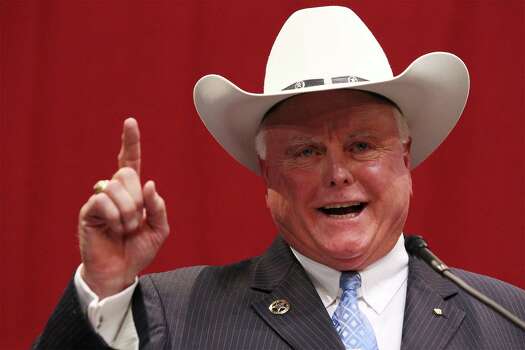
Return of Freedom Fries in Texas Means Increased Obesity for High School Students

by Nomad

Texas state officials continue to march backwards in the name of deregulation. Serving fat and sugar to Texas children is a salute of freedom.


According to a top official at the Texas Department of Agriculture, Commissioner Sid Miller, a decade-old statewide ban on deep fat fryers in public schools must be repealed. 
That ban prohibits deep fat fryers and soda machines on school campuses and places limits on the time and place that junk food can be sold there.

Miller says he thinks that repealing these parts of the Texas Public School Nutrition Policy will streamline things, pulling the state into line with less-strict national standards. Under his plans, the presently-mandated schools will be free to decide for themselves whether to abide by the policy. 

Miller claims that “it isn't about french fries, it's about freedom." 

And who on Earth could be against freedom?

For the Love of Freedom and Fat
The deep fat fryer and soda machine ban are the last of strict nutritional policies introduced by former Agriculture Commissioner Susan Combs. In 2004, in addition to those bans, Combs introduced the more comprehensive Texas Public School Nutrition Policy, which banned foods with high levels of sugar and fats in public schools. The policy was repealed last year, when Todd Staples was commissioner, and Miller has consistently expressed his support for less regulation of food in schools.
Three Texas whoops for de-regulation!

Saturday, April 25, 2015

Free Market Mayhem: Do You Really Want to Live in a World without Environmental Regulations?

by Nomad

For corporations, a world without rules, without any annoying government interference might be heaven on Earth. But for the rest of us, it could be pretty damned close to hell on Earth.
We already have plenty of evidence of what life could be like if de-regulators get their way.


We often hear a lot of chatter about the benefits of deregulation and how important it is to avoid government interference in the world of big business. 
True to their Ayn Rand roots, both Ted Cruz and Rand Paul, both candidates in 2016, have expressed the idea that "If only the government got its hands out of the private industries, then a purer form of capitalist harmony would emerge."

Free-market libertarians believe in a totally hands-off approach to government and this includes nearly all corporate oversight. Since governments (and the laws they create) are the only powers strong enough to regulate things, corporations would essentially become unrestricted and above the law. One way to that is by eliminating the agencies that are involved in policing.

In November of last year, Senator Mitch McConnell of Kentucky stated that his top priority was not going after the major polluters -such as the mining industry- His utmost concern was trying to do what he could “to get the EPA reined in.” 

The US Environmental Protection Agency (EPA) is primarily tasked with effectively managing, overseeing, and enforcing environmental laws. It has the legal authority to go after and prosecute polluters who would choose the break the laws in the name of profits.
So, all in all, McConnell's soundbite might seem like an unusual position for a politician charged with protecting the public interest. However, an investigation explains his personal stake in shielding the coal industry.